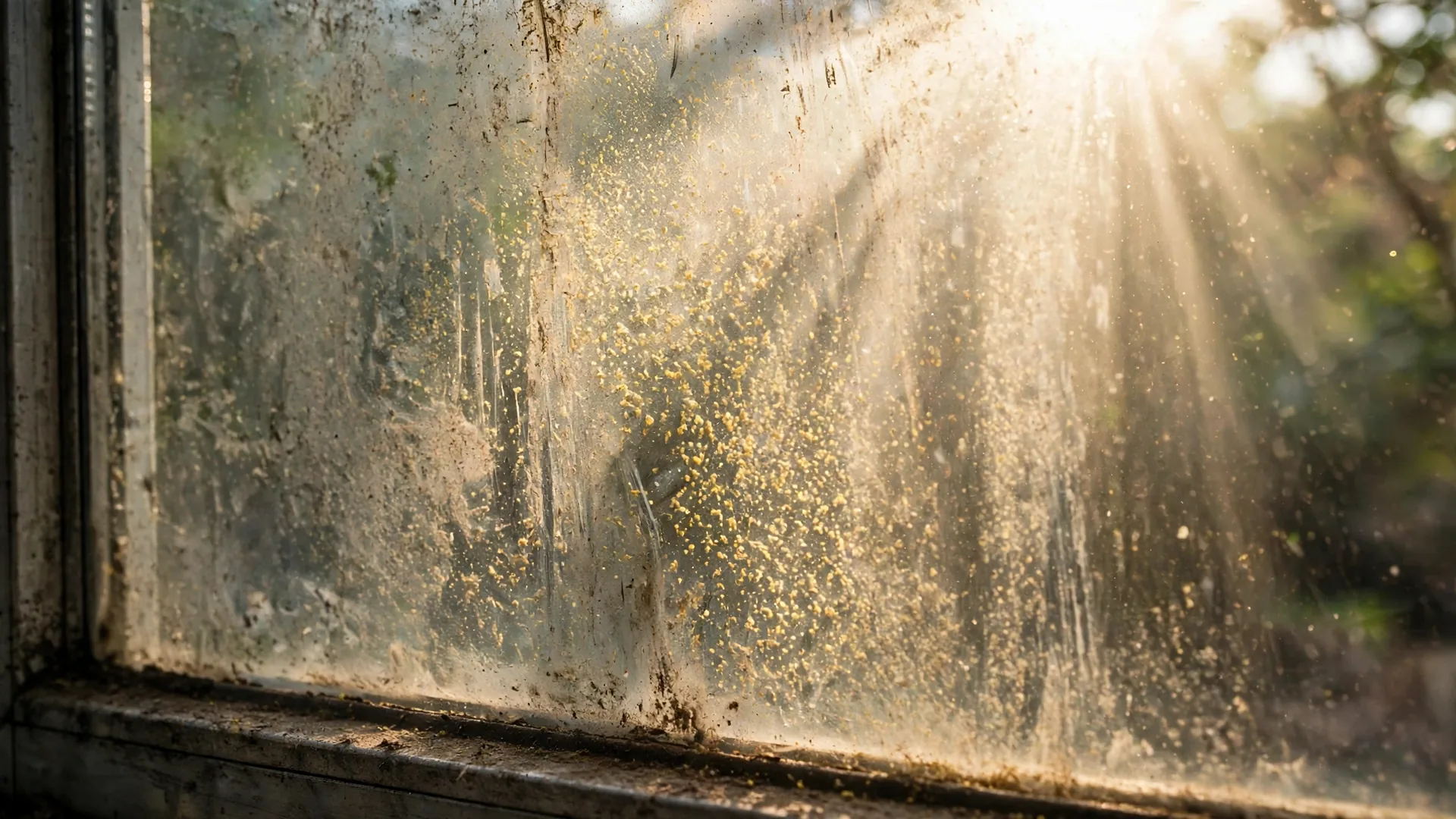
Windows get dirty so fast because glass sits at the receiving end of everything moving around your property: airborne dust, seasonal pollen, road film, sprinkler minerals, and grime washing down from the frames, screens, and tracks every time it rains. Most of what you see on the glass did not land there directly. It migrated from the parts around it, which is why glass that was washed without its surroundings looks dull again within weeks.
Airborne dust never stops
The air is full of fine particles, and glass is a willing collector. Dust from soil, construction, and unpaved surfaces rides the wind and settles on every upward facing sill and outward facing pane. Near busy roads, a thin film of exhaust and tire residue adds a gray haze that water alone will not move. Glass also picks up a slight static charge, which helps fine particles cling instead of blowing off. The result is a gradual dulling that you notice all at once on a sunny morning, even though it built up grain by grain.
Dust is also why upper floors can look worse than ground floors. Wind moves faster with height and carries particles further, so second story glass and high panes collect dust that never reaches the sheltered windows near the ground. A water fed pole with pure water is the usual professional answer for that glass, since it washes and rinses from the ground without leaving mineral spots behind. If your upper windows always look worse, dust exposure plus hard access is usually the explanation, and it is exactly what our exterior window cleaning visits are set up to handle.
Pollen season coats everything
Pollen is the most visible of the airborne causes. Tree pollen in spring lays a yellow film over exterior glass, patio doors, and skylights, sometimes thick enough to write in. Grass and weed pollen follow through summer in many areas. The film is not just cosmetic for long: pollen contains organic compounds that can bond lightly to glass when baked on by sun, making later cleanings take more passes.
Screens make pollen worse, which surprises people. A screen is a filter, and during pollen season it loads up fast. Every breeze then shakes a little of that load loose onto the glass behind it, and every rain drives it in deeper. Cleaning the glass while leaving pollen packed screens in place is one of the classic reasons a fresh cleaning seems to vanish in days. Washing the screens as part of the visit breaks the cycle, because the reservoir of pollen sitting against the glass is gone.
Sprinklers are the fastest way to spot glass
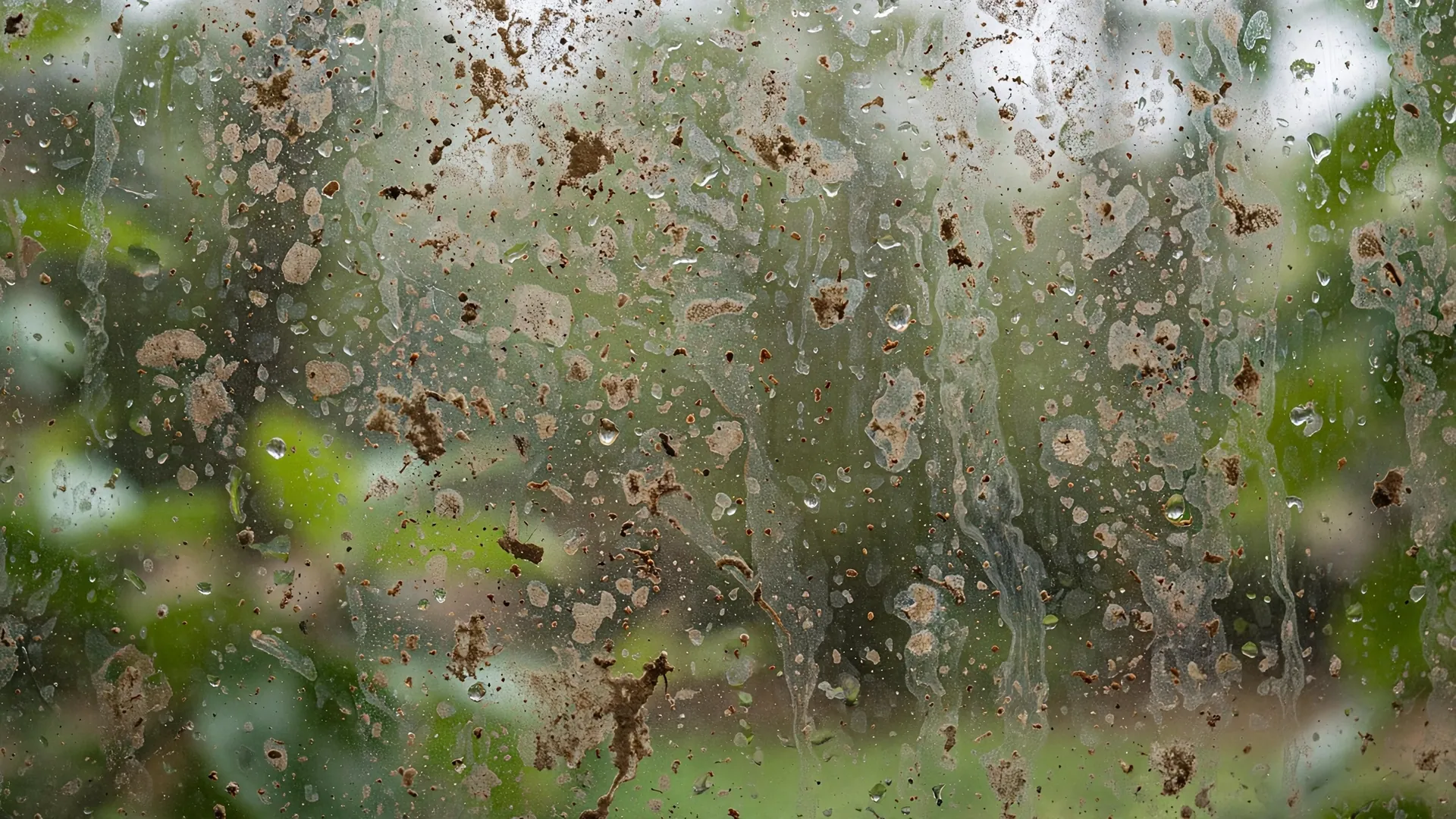
If your windows develop white spots within days of a cleaning, look at the sprinklers before you blame the crew. Irrigation water carries dissolved calcium and magnesium, and when sprinkler spray hits glass and evaporates, those minerals stay behind as hard water spots. A single misaligned sprinkler head can undo a professional cleaning on the panes it reaches, and repeated cycles bake the deposits into a crust that eventually etches the glass surface.
The fix is aiming, not abandoning the lawn. Adjust sprinkler heads so their arc stops short of the glass, and consider drip irrigation for beds directly under windows. If re aiming is not possible, expect those panes to need attention more often, and mention the sprinkler exposure when you book so the visit can include a mineral treatment pass. Homes on well water see this most, since well water tends to run harder than municipal supplies, but any sprinkler that mists the glass will spot it.
Your screens, tracks, and frames feed the glass
Here is the cause most people miss. A window is a system, and the glass is only its most visible part. Dirty screens shed dust onto the pane with every gust. Tracks collect a sludge of dirt, dead insects, and decayed leaves that turns liquid in the rain and wicks up onto the lower glass. Frames shed oxidized paint and chalky residue, especially older aluminum and painted wood, and that residue streaks down the pane in wet weather. Sills gather soil splash from the ground below.
All of this means a glass only wash has a short shelf life. The surroundings act as dirt reservoirs, and the first rain or windy day starts the transfer. This is the core argument for full cleanings on a regular rhythm: when the screens are washed, the tracks are vacuumed, and the frames and sills are wiped, there is simply less dirt available to migrate. The glass stays clear for months instead of weeks. Our residential window cleaning visits include those parts for exactly this reason, and the difference in how long results last is the main thing customers notice.
Weather moves dirt around
Rain gets blamed for dirty windows more than it deserves. Rainwater itself is fairly pure, but rain is an excellent delivery system for dirt that was already waiting nearby. It rinses dust off the roof edge and fascia onto upper glass, flushes track sludge upward, and throws soil splash from beds and lawns onto lower panes. Wind driven rain reaches glass that normal rain never touches, which is why the weather side of a house always looks worse.
Condensation plays a quieter role. On cool mornings, moisture forms on glass and runs down in thin sheets, carrying a little dust with it and leaving faint trails as it dries. In bathrooms and kitchens, steam condensation does the same on the interior side, gradually building a haze. None of this means rain or humidity damages your windows. It means weather is a transport system, and the amount of dirt it can transport depends on how much dirt is sitting around waiting for a ride.
What speeds it up and what slows it down
You cannot stop windows from getting dirty, but you can change the rate. The factors below are the ones that move the needle most, with the practical response for each.
| Factor | Why it dirties glass | What slows it down |
|---|---|---|
| Sprinklers hitting glass | Mineral deposits bake on with every cycle | Re aim heads away from panes; use drip beds near windows |
| Dirty screens | Loaded screens shed dust and pollen onto glass | Wash screens with every full cleaning |
| Dirty tracks and sills | Rain turns track sludge liquid and wicks it upward | Vacuum and wipe tracks and sills each visit |
| Road or construction dust | Fine particles and exhaust film coat exterior panes | More frequent exterior washes on the road facing side |
| Heavy pollen seasons | Pollen films glass and packs into screens | Time cleanings after the pollen drop; wash screens |
| Infrequent cleaning | Light grime bonds and etches the longer it sits | Regular schedule before buildup hardens |
The pattern in the table is consistent: the surroundings matter as much as the glass. Two homes on the same street can have very different results from the same cleaning if one has sprinklers misting the panes and packed screens while the other does not. When you look at the full list of services, notice how much of the work targets the parts around the glass. That is not upselling. It is where lasting results come from.
Fast re soiling is usually a sign that the dirt is coming from somewhere specific: a sprinkler, a packed screen, a road facing exposure. Find the source and the cleaning lasts. If you want a visit that addresses the causes instead of just the symptoms, request a free quote and tell us what your windows face.