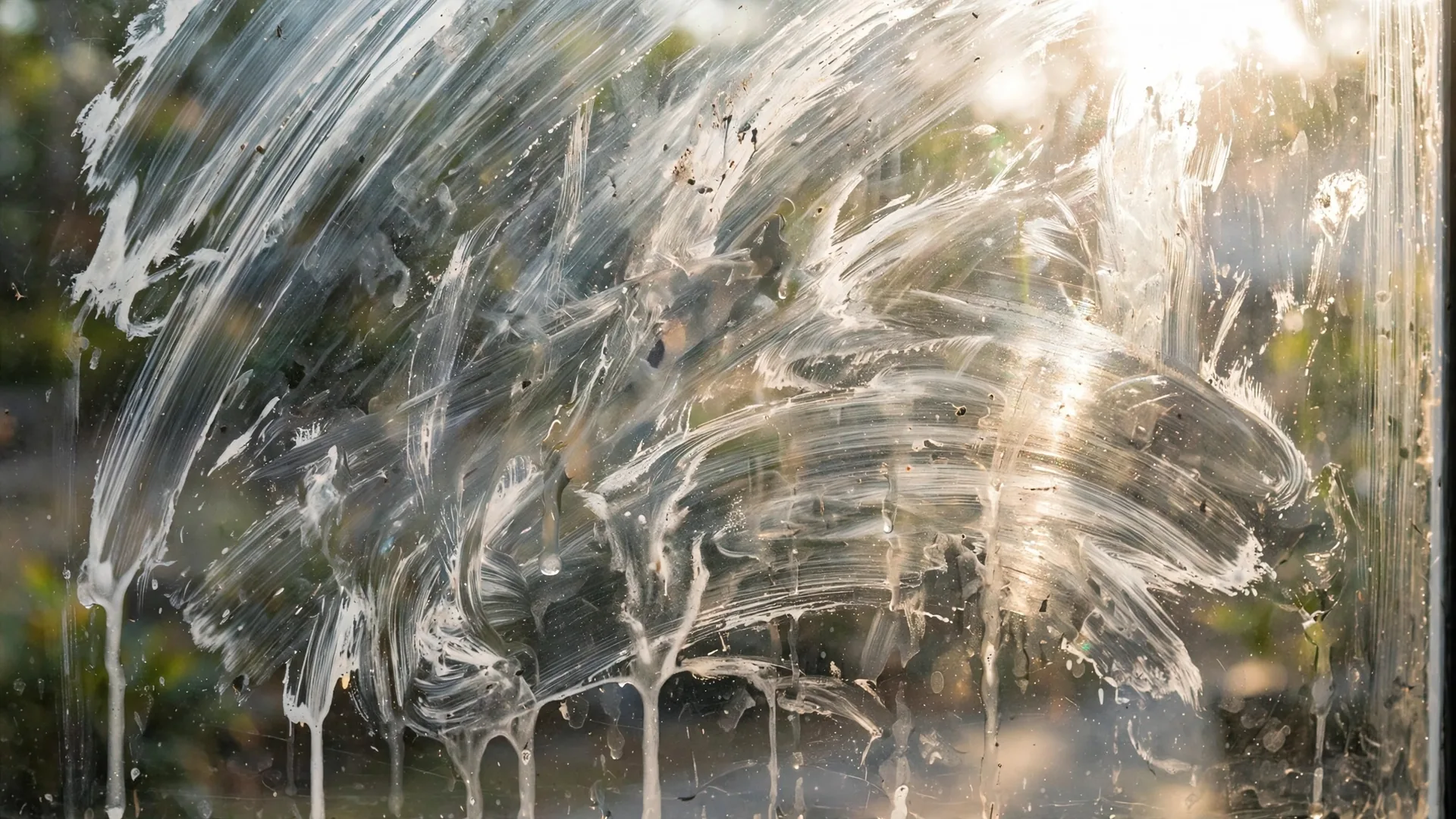
Streaks after cleaning are dried residue, not dirt you missed. They form when cleaning solution, minerals, or loosened grime dry on the glass before the squeegee removes them, or when a dirty tool spreads a thin film instead of lifting it away. The usual culprits are dirty water, too much soap, direct sun, and liquid hiding in edges and gaskets that creeps back onto the pane after you walk away.
Dirty tools and dirty water
The most common cause of streaky windows is also the most overlooked: the cleaning water itself. A strip washer that has cleaned ten panes without a rinse is no longer applying clean solution. It is painting diluted grime across the glass. The same goes for the bucket. Once the water turns gray, every dip reloads the applicator with the very dirt you are trying to remove, and the squeegee can only pull off part of it. What remains dries into a faint haze that shows up the moment sunlight hits the pane.
The squeegee blade matters just as much. A nicked or worn blade leaves thin lines of water with every pass, and those lines dry into visible streaks. Professionals wipe the blade after nearly every stroke and replace rubber long before it looks destroyed, because a blade that looks fine can still be past its best. Towels are the third offender. A towel that has been used to wipe frames and sills carries grit and residue, and dragging it across glass transfers both. Clean tools, fresh water, and a blade in good shape solve more streak problems than any change of cleaning product.
Sun and heat dry the glass too fast
Cleaning solution needs to stay wet until the squeegee reaches it. On glass in direct sun, especially in summer, the thin film of solution can start drying within seconds of application. Once it dries, the dissolved dirt and soap settle back onto the surface as residue, and no amount of re squeegeeing over the dry area will fix it without re wetting the whole section.
The professional answer is sequencing, not speed. Work the shaded side of the building first and follow the shade around. Start early in the morning before the sun climbs. Keep each working section small enough that the mop and the squeegee stay a few seconds apart, never minutes. On large commercial panes, water fed poles with pure water systems change the equation, because the filtered rinse dries spot free even in warm air. But for traditional squeegee work, shade and section size are the whole game. If you have ever watched a technician skip a sunny wall and come back to it later, this is why.
Too much soap leaves its own film
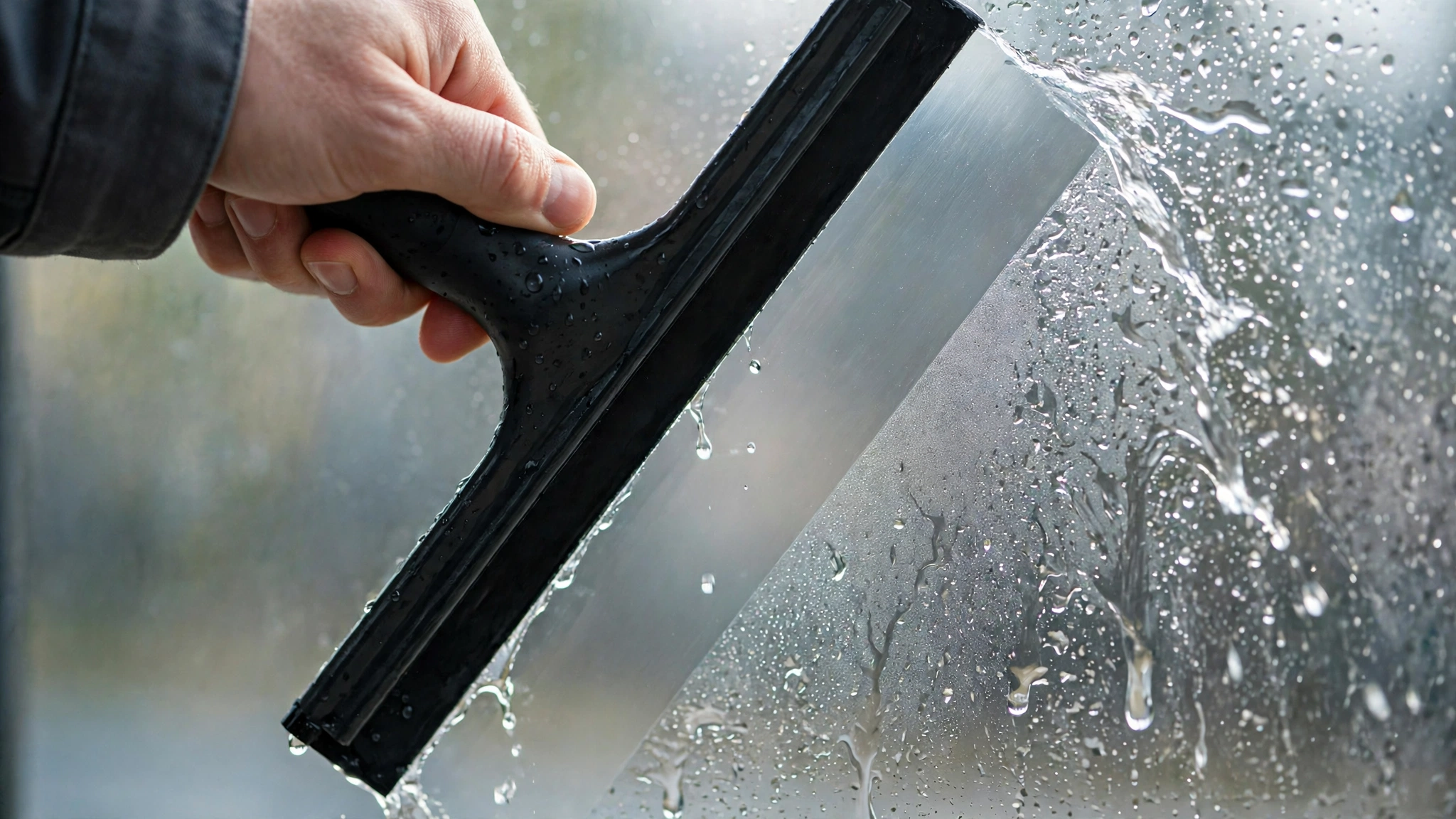
More soap does not mean cleaner glass. A heavy solution mix leaves surfactant residue on the pane, and that residue does two things: it dries into a visible film, and it attracts dust afterward, so the glass dulls faster. The correct mix is surprisingly lean, just enough soap to let the squeegee glide and to loosen surface dirt. If the solution feels slippery between your fingers to an extreme, it is too strong.
Residue also comes from products that were never meant for glass. All purpose cleaners, dish soap used at full strength, and sprays with fragrances or moisturizers can all leave films that read as streaks. Even some products labeled for glass leave residue if they are over applied and never fully removed. The rule is simple: use a product made for glass, mix it lean, and remove all of it with the squeegee rather than letting any of it air dry.
Edges, gaskets, and frames bleed back
Some of the most frustrating streaks appear on glass that looked perfect when the technician left. The cause is liquid hiding where the squeegee cannot reach: in the rubber gaskets around the pane, along the frame edge, and in the weep holes at the bottom of the frame. Cleaning solution wicks into these spaces during the wash, then slowly seeps back onto the dry glass over the next hour, leaving drip shaped streaks along the borders.
This is why detailing the edges is a separate step, not an afterthought. After the squeegee work, the edges get a careful pass with a dry detailing cloth, pressing lightly into the gasket line to draw out trapped liquid. On windows with deep frames or heavy gaskets, a second detailing pass after a few minutes catches what the first one missed. Dirty frames make bleed back worse, because the liquid seeping out carries frame grime with it. A visit that includes frame washing, like our residential window cleaning service, removes that source at the start instead of fighting its effects at the end.
The sequence that prevents streaks
Streak free results come from a repeatable sequence rather than any single trick. Whether you are touching up one pane or watching a crew work through your home, these are the steps that keep residue off the glass.
- Remove dry dirt first. Brush or vacuum loose dust from the glass, frame, and sill so it does not turn to mud in the wash water.
- Start with fresh solution. Mix a lean soap solution and change the bucket water as soon as it looks gray, not when the job is done.
- Wet one section at a time. Mop the applicator over a section the squeegee can finish before anything dries, smaller in sun, larger in shade.
- Squeegee with overlapping passes. Keep the blade at a steady angle, overlap each pass slightly, and wipe the blade clean after every stroke.
- Detail every edge. Run a dry cloth along the gasket line and frame edges to pull out trapped liquid before it can creep back.
- Change towels often. Rotate to a clean dry cloth for detailing, and never use a frame wiping towel on glass.
- Work in the right conditions. Follow the shade, avoid the hottest part of the day, and keep wind blown dust in mind on exposed sites.
- Inspect from more than one angle. Check each pane from the side and against the light before moving on, because streaks hide in flat light.
Notice how little of this is about products. Technique and timing do the heavy lifting. That is also why interior window cleaning can be surprisingly tricky for homeowners: interior glass is cleaned in still air with no breeze to help drying, so any residue left behind shows up clearly under room lighting.
When it is not a streak: film, spots, and scratches
Not every mark that looks like a streak behaves like one. Hard water mineral deposits form a whitish film that survives normal washing and needs a dedicated mineral treatment. New windows sometimes carry a silicone or manufacturing film that smears when cleaned with standard solution and needs a specific removal pass. And fine scratches in the glass catch the light in lines that look exactly like squeegee streaks but will not wipe away, a common find on panes that were scraped with a blade at the wrong angle in the past.
If you have re cleaned a pane carefully and the marks will not move, stop and reassess instead of scrubbing harder. Mineral film, coating damage, and scratches each need a different response, and aggressive scrubbing can turn a cosmetic issue into real damage. For glass with heavy mineral buildup, an exterior window cleaning visit with proper mineral treatment is the safer next step than another round of elbow grease. You can compare approaches across our full services range to find the right one for your glass.
Streaks are a symptom with a short list of causes, and every one of them is preventable with clean tools, lean solution, shade, and edge detailing. If your windows keep streaking no matter what you try, the cause may be mineral film or glass damage rather than technique. Request a free quote and we will take a look and tell you which one you are dealing with.