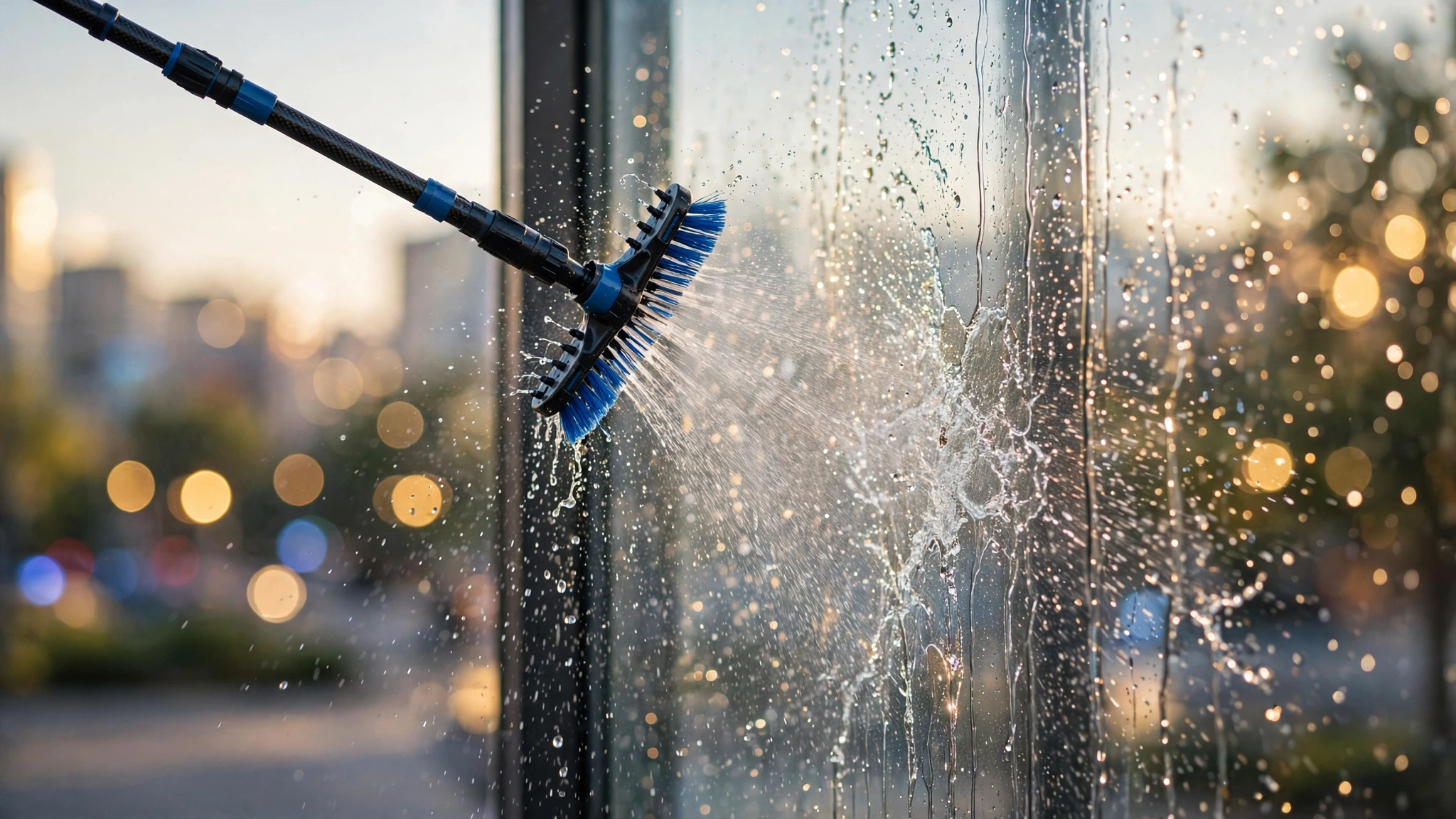
Pure water window cleaning is an exterior cleaning method that washes glass with water that has been filtered to remove dissolved minerals. A multi stage filtration unit strips out calcium, magnesium, and other dissolved solids, leaving water that measures near zero on a TDS meter. A technician then applies this water through a water fed pole fitted with a soft brush head, scrubbing the glass and frames and rinsing them clean. Because the water holds almost no minerals, it dries to a spot free finish without any soap, squeegee work, or towel drying. The method is also called deionized water window cleaning, named after the final filtration stage.
Traditional window cleaning takes the opposite approach. It applies water mixed with a professional detergent, agitates the dirt with a washer sleeve, and removes the solution with a squeegee before detailing the edges. That method works well, but any detergent left behind can leave a faint film, and every upper window requires ladder work. Pure water cleaning removes the detergent from the equation entirely and lets the technician work from the ground, which is why it has become the standard choice for upper exterior glass on homes and commercial buildings.
How the purification process works
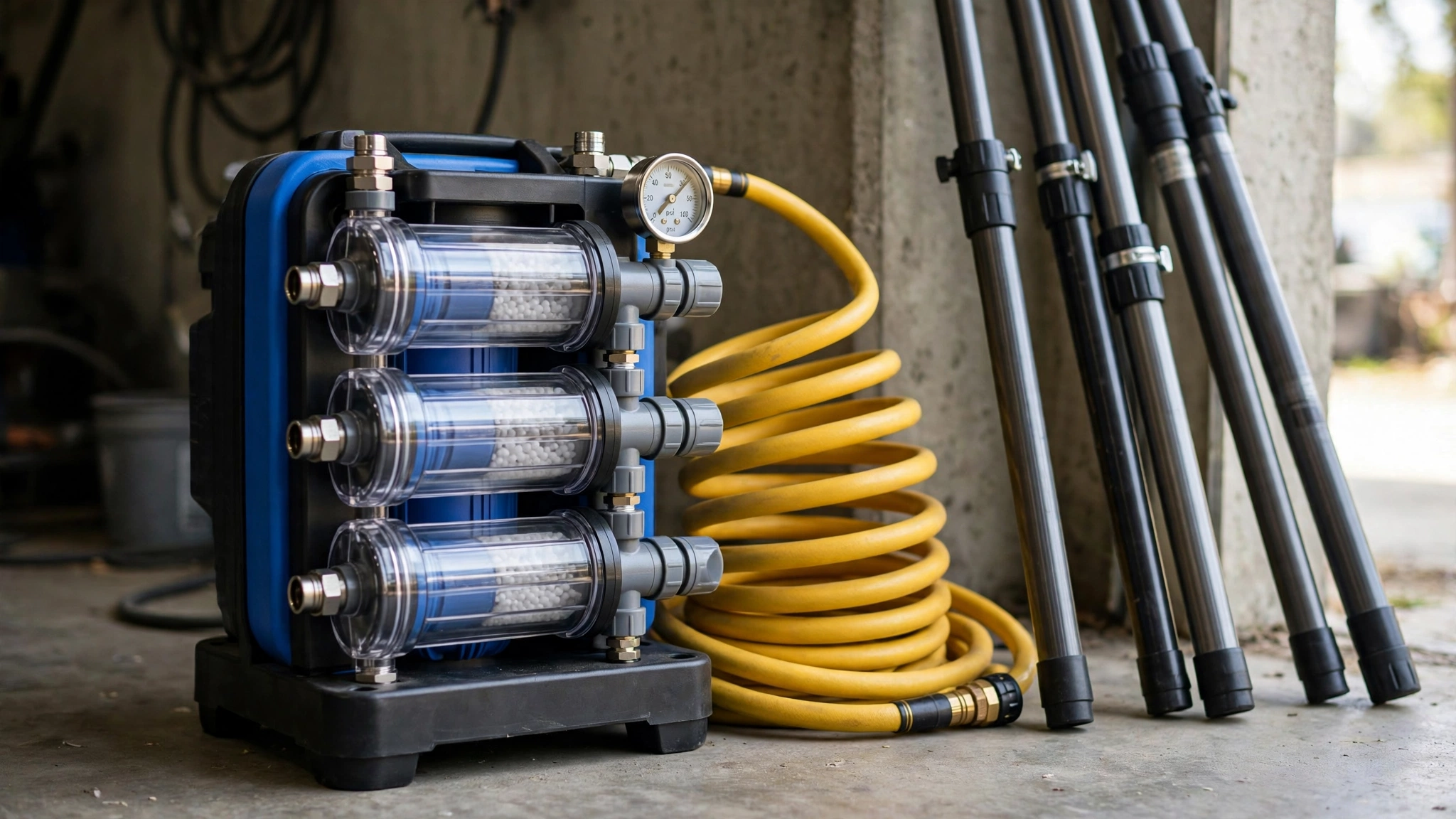
Tap water is never pure enough for this method. Even clear looking tap water carries dissolved minerals that dry into spots, so the water passes through several filtration stages before it ever touches the glass. Each stage removes a different category of contaminant, and the stages work in order from largest particles to the finest dissolved ions.
- Sediment pre filter. The first stage catches sand, rust flakes, and other large particles that would clog the finer filters downstream.
- Carbon filter. The second stage removes chlorine and organic compounds. Chlorine matters because it can damage the reverse osmosis membrane in the next stage, so it has to come out first.
- Reverse osmosis membrane. Water is forced through an extremely fine membrane that rejects the large majority of dissolved solids. This stage does most of the purification work.
- Deionization resin. The final stage captures the remaining dissolved ions, bringing the water down to near zero dissolved solids. This is the stage that gives deionized water window cleaning its name.
A professional checks the output with a TDS meter, which measures total dissolved solids in parts per million. A reading near zero confirms the water is pure enough to dry spot free. Readings are usually taken at the start of the job and checked again during the day, because resin and membranes wear out and the water quality changes as they do. If the reading climbs, the filters need service before the work continues.
How water fed poles reach the glass
The purified water travels up a telescopic pole, usually made of carbon fiber to keep it light, and out through jets in the brush head. The technician scrubs the window with the brush to loosen dust, pollen, cobwebs, and grime, then rinses the glass thoroughly with a steady flow of pure water. There is no squeegee pass and no towel detailing. The glass is left wet and dries on its own, and because nothing in the water can leave a mineral deposit, it dries clear.
The practical advantage is reach. A water fed pole lets one technician clean second and third story exterior windows while standing on the ground, which removes a large share of ladder placements from the job. That matters on properties where ladders sit poorly, such as glass above sloped landscaping, flower beds, or soft soil. Frames, sills, and screens get rinsed during the same process, which keeps dirty runoff from re soiling the finished glass.
Water fed pole window cleaning is primarily an exterior method. Interior glass sits in a controlled environment, collects different soils like fingerprints and cooking film, and has no drainage path for rinse water, so interiors are still cleaned with traditional tools: washer sleeve, squeegee, and careful edge detailing. A complete service pairs the right method with each side of the glass rather than forcing one method everywhere.
Pure water vs traditional window cleaning
Neither method is better in every situation. The table below compares them across the factors that matter on a real job.
| Factor | Pure water method | Traditional method |
|---|---|---|
| Cleaning solution | Filtered water with no detergent | Water mixed with professional detergent |
| Drying | Air dries spot free on its own | Squeegee pass plus edge detailing |
| Upper window reach | Pole work from the ground | Ladder or lift access |
| Best suited for | Exterior glass, frames, and large window counts | Interior glass, first time deep cleans, and heavy grime |
| Residue risk | Very low, since nothing is added to the water | Low when rinsed and detailed properly |
What pure water handles well and where it falls short
Pure water is excellent at removing the everyday soils that collect on exterior glass. Dust, pollen, cobwebs, bird droppings, and light water spots all lift away under the brush and rinse clean. It also handles general atmospheric grime, which is the dull gray film that builds up on glass near roads or in cities. For routine maintenance washes on a regular schedule, it is often the fastest route to a uniform finish across the whole building.
It has honest limits, and a good company will name them before quoting. Pure water cannot fix etched hard water stains, because etching is mineral damage to the glass surface itself rather than dirt sitting on top of it. It will not remove paint overspray, silicone smears, or construction debris, which need scraping and specialty solvents. It cannot repair a failed window seal or polish out scratches. When any of those conditions are present, the right answer is a different service, such as stain removal or post construction cleaning, sometimes combined with a pure water wash as the final step.
Where pure water window cleaning works best
Upper exterior windows on homes are the classic use case. A two story home with glass over a sloped yard or a deck is exactly the situation where pole work beats ladder work for both safety and speed. Our exterior window cleaning service uses pure water methods on upper glass where they fit, and traditional tools where they do not.
Commercial properties benefit in a similar way. Storefronts, office facades, and buildings with long runs of glass need a method that moves quickly and leaves a uniform finish, which is why pure water is common in commercial window cleaning. It also suits glass that is simply awkward to reach, such as skylights, glass above conservatories, and windows over delicate landscaping. When access itself is the main challenge, our hard to reach window cleaning service pairs pure water poles with other access solutions to cover glass that ladders cannot serve safely.
What a quality pure water service should include
The method only delivers its promised finish when the details around it are handled. Before agreeing to a pure water service, check that these steps are part of the scope:
- TDS reading at the start. The technician should confirm near zero dissolved solids before washing, not just assume the filters are still good.
- Frames, sills, and tracks first. Dirty frames shed grime onto clean glass, so they should be brushed and rinsed as part of the wash.
- Screens cleaned separately. Screens hold dust that washes onto glass in the next rain, so they should be removed, washed, and replaced.
- Top to bottom rinse order. Rinsing from the top down keeps dirty water from drying on finished glass below.
- Final inspection. The finished glass should be checked from inside and at an angle, where missed spots show most clearly.
A company that skips the frames and screens is not really delivering a pure water service, because the glass will look dirty again after the first rain washes frame dirt across it. The full scope matters more than the method name on the quote.
Frequently asked questions
If your upper exterior glass is hard to reach, or you simply want an exterior wash that dries without soap residue, our window cleaning services include pure water methods wherever they are the right fit. Request a free quote and we will recommend the right method for your property after seeing what your glass actually needs.