
A professional window cleaning service usually includes washing the glass on the agreed sides of each window, plus wiping the frames and sills. Screens, tracks, and specialty treatments such as hard water stain removal are often part of a full scope or added by agreement. The exact professional window cleaning scope should always be written down before the visit, because every company defines the details a little differently.
If you are comparing companies, a window cleaning service checklist is the most useful tool you have. This guide walks through each part of a typical visit, what each part involves, what is usually extra, and how to confirm the scope before anyone picks up a squeegee.
The standard scope, piece by piece
Most professional visits cover the items in this table. Where companies differ is whether each item sits in the base price or is listed as an extra, so treat the table as a checklist to confirm, not as a promise every company makes.
| Part of the visit | What it usually covers |
|---|---|
| Exterior glass | Scrubbing and squeegeeing the outside of each pane, including upper floors reached by ladder or water fed pole. |
| Interior glass | Scrubbing and squeegeeing the inside of each pane where interior service was agreed, with floors and furniture protected. |
| Frames | Wiping the window frames to remove dust, cobwebs, and grime from the visible surfaces. |
| Sills | Wiping interior and exterior sills so the finished window looks clean edge to edge. |
| Screens | Removing, washing, drying, and reinstalling screens, often as part of a full detail or as an extra. |
| Tracks | Vacuuming and wiping the channels where sliding sashes move, often as part of a full detail or as an extra. |
| Glass doors and sidelights | Counted and cleaned like windows, since they are the same glass and the same work. |
Notice what the table does not include: guarantees about results on damaged glass, or restoration of glass that is etched or scratched. Cleaning removes dirt and deposits. It does not repair glass, and an honest company will tell you when a pane is past what cleaning can fix.
Screens: what screen cleaning actually means
Do window cleaners clean screens and sills? Sills, almost always. Screens, usually, but confirm it. Real screen cleaning is a small process of its own: each screen is removed, brushed and washed on both sides, rinsed, left to dry, and reinstalled. Screens hold a surprising amount of dust and pollen, and dirty screens transfer that grime straight back onto clean glass the next time it rains. That is why a visit that skips the screens can look good for a week and then disappoint.
While screens are out, a good technician also notes damaged mesh or bent frames and mentions them to you. Replacement is a separate job, but knowing about it lets you plan.
Tracks, sills, and frames: the detail work
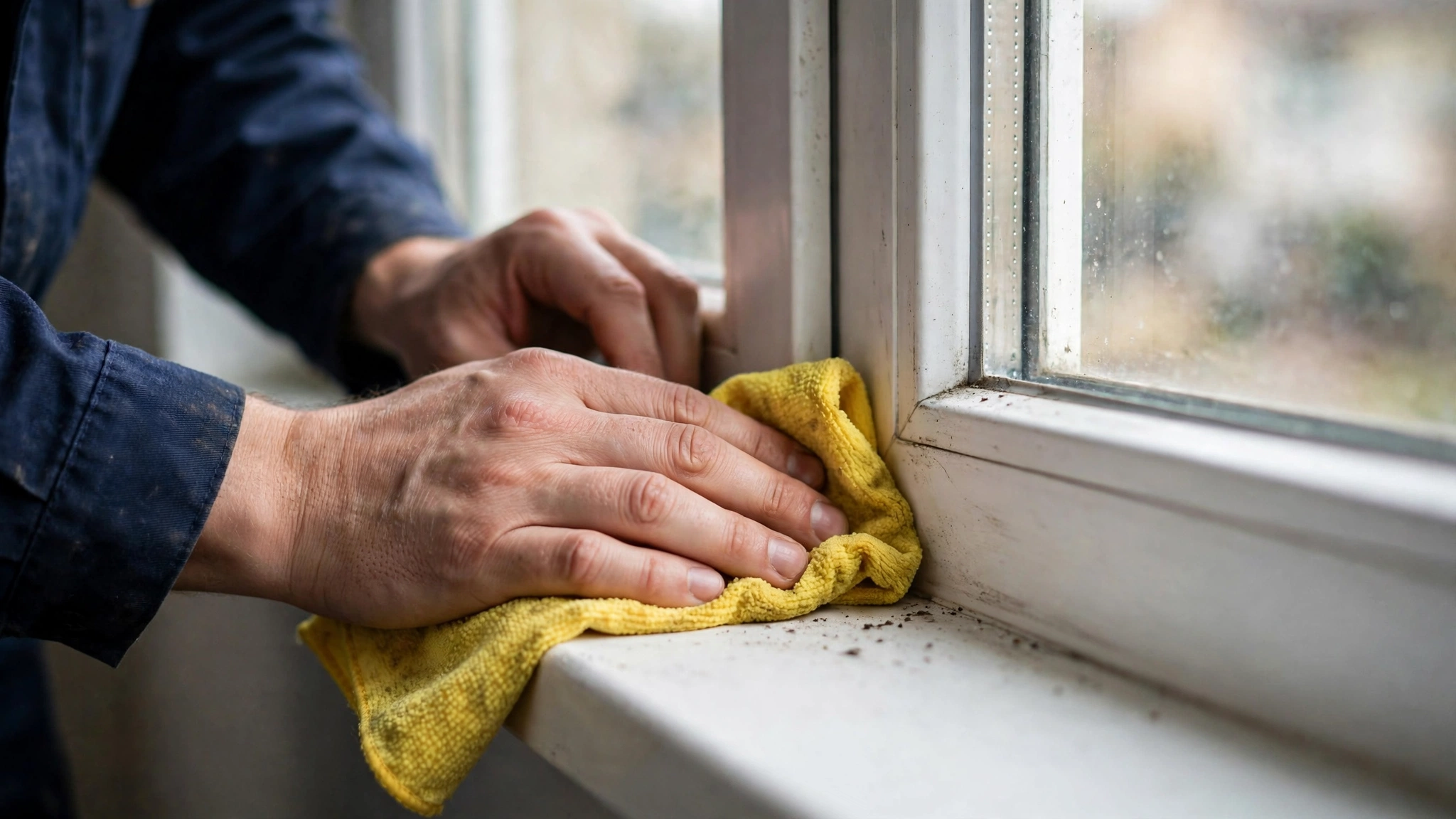
Tracks collect everything the wind carries: dust, pollen, dead insects, and grit. On sliding windows that buildup does more than look bad. It makes sashes stick and grinds dirt into the moving parts. Track detailing usually means vacuuming the channel, loosening what is stuck with a brush, and wiping it clean. It is fiddly work, which is exactly why it is often listed separately from the glass.
Sill wiping is simpler but just as visible. The sill is the ledge your eye lands on when you look out the window, and a clean pane above a dirty sill still reads as a dirty window. Frame wiping clears cobwebs and dust from the visible frame surfaces. Together these three details are what separate a quick glass wipe from a finished professional visit.
What is usually extra
Some work sits outside a standard clean because it needs different tools, more time, or a judgment call on the glass. Common extras include:
- Hard water stain removal, which uses specialty products and extra passes on mineral deposits from sprinklers or runoff.
- Paint overspray, adhesive, or construction debris removal, which needs careful scraper work.
- Screen repair or replacement, which is a separate trade skill from cleaning.
- Interior skylights or glass in difficult positions, priced for the access they require.
- Chandelier or light fixture cleaning, offered by some companies as a separate service.
None of these should appear as a surprise on the invoice. If the estimator spots mineral deposits or paint during the walkthrough, that is the moment to discuss it and agree on the treatment before the visit.
The equipment behind the scope
The scope is only as good as the tools used to deliver it. A professional visit typically runs on a small set of proven equipment: scrubbers that loosen dirt without scratching, squeegees with sharp rubber that leave no lines, extension and water fed poles that reach upper glass from the ground, and pure water systems that filter tap water so it dries without spots. Ladders and access equipment handle what poles cannot, and drop cloths protect your floors during interior work.
Pure water deserves a note because it changes what exterior cleaning looks like. Filtered water contains no minerals, so it can be brushed onto the glass and left to dry spot free with no squeegee pass. It is excellent for upper exterior panes and for homes where ladder placement is awkward. Interiors still get the classic scrub and squeegee, since pure water systems are an exterior tool.
How to compare scopes when you collect quotes
Use this window cleaning service checklist with every company you contact. Ask each one the same questions and write down the answers:
- Which windows are covered, and is that every window on the property or a list we agree on.
- Is the glass cleaned on the inside, the outside, or both.
- Are screens removed, washed, and reinstalled, or is that an extra.
- Are tracks vacuumed and wiped, and are sills and frames wiped.
- How are hard water stains, paint, or construction debris handled and priced.
- Will I receive the full scope in writing before the visit.
- What is explicitly excluded from the visit.
That last question matters most. Exclusions are normal: every company has them. What you want is to know them before the crew arrives, not after.
Different properties also call for different scopes. A residential window cleaning visit often covers the whole home inside and out, while an interior window cleaning visit focuses on inside glass with full floor and furniture protection. Businesses tend to book exterior window cleaning on a schedule to keep customer facing glass sharp. You can compare every option in our window cleaning services hub.
Want a visit with a clearly defined scope? Request your free quote and we will walk through exactly what is included for your property: which windows, which sides, screens, tracks, sills, and frames, all in writing before we start.