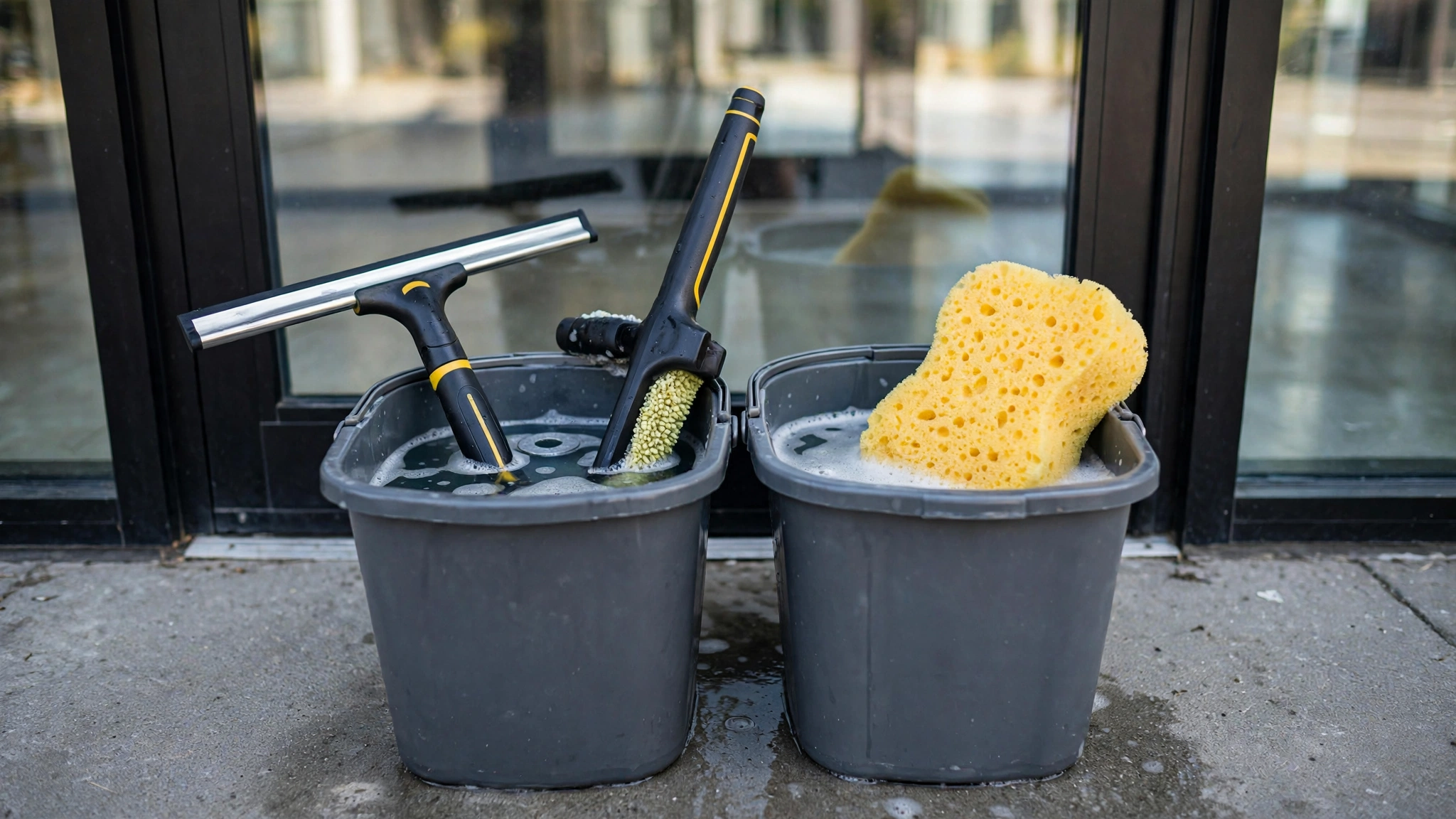
The difference between window washing and window cleaning is scope. Window washing usually means washing the glass panes themselves, most often from the outside, with a mop and a squeegee. Window cleaning usually means a fuller service that adds the frames, sills, tracks, and screens, covers the interior side of the glass as well, and finishes with careful edge detailing. In everyday speech the two terms overlap a lot, so the definition that matters is the one written into the quote you accept.
Why the two terms get mixed up
Ask ten companies what they mean by washing and cleaning and you will hear ten slightly different answers. The confusion has roots in the trade itself. The classic image of a window washer is a technician with a bucket and squeegee working a route of storefronts, moving fast from pane to pane. That kind of washing is a maintenance service built for frequency. The term window cleaning grew up around the residential side of the trade, where a visit means ladders, drop cloths, screen removal, and a slower pass over every part of the window unit. Over time both words leaked into each other's territory, and marketing finished the job.
Region plays a part too. In some areas every company calls itself a window cleaning company and uses washing to describe the glass only pass. In others the two words are fully interchangeable on quotes and websites. Neither usage is wrong on its own. The problem starts when a customer reads cleaning on one quote and washing on another and assumes they describe the same job. They often do not, and the price gap between them usually reflects real differences in labor, not one company being cheaper than the other.
The practical fix is simple. Treat the words as a starting point for a question, not as a specification. Ask what is included, get the answer in writing, and compare line items instead of totals. The rest of this article shows you what each term typically covers so you know which questions to ask.
What window washing typically includes
A standard washing visit centers on the glass. The technician wets each pane with an applicator, often called a strip washer, loosens the surface dirt, and pulls the water off with a squeegee in smooth passes. Edges get a quick wipe. The work is usually exterior only, though many companies will wash interior glass on request or as part of a route that covers both sides of a storefront. Because the scope is narrow, washing is fast, which is why it suits repeat schedules: weekly or biweekly storefront routes, monthly office glass, or a quick exterior refresh on a home between deeper visits.
Washing does not normally include removing screens, vacuuming tracks, or scrubbing frames and sills. Those parts of the window unit take separate time and separate tools, and they are where the line between washing and cleaning is drawn. If your tracks stick, your screens look gray, or your sills collect dust, a wash will make the glass shine for a while, but the surrounding parts will keep feeding grime back onto it. That is the main limitation to understand before you choose. For an exterior window cleaning visit that goes further than a basic wash, the quote should spell out the extras.
| Part of the job | Window washing | Full window cleaning |
|---|---|---|
| Glass panes | Yes, the main focus | Yes, inside and out |
| Interior glass | Sometimes, on request | Yes, standard |
| Frames | Usually not | Yes, washed and wiped |
| Sills | Usually not | Yes, wiped down |
| Tracks | Usually not | Yes, vacuumed and wiped |
| Screens | Usually not | Yes, removed, washed, replaced |
| Edge detailing | Quick wipe | Careful detailing pass |
| Best used for | Frequent maintenance | Periodic deep service |

What full window cleaning adds
Full cleaning starts where washing stops. Screens come out and get washed with a soft brush and rinsed clean, which matters because dirty screens are one of the main reasons glass looks dull again within weeks. Tracks get vacuumed to pull out the grit and dead insects that collect there, then wiped. Sills get wiped, frames get washed, and the glass gets the same careful squeegee work as a wash, on both the interior and exterior sides.
The interior side of the job has its own rhythm. Furniture near the glass gets moved or protected, drop cloths go down, and the technician works top to bottom so drips do not land on finished panes. Interior glass collects a different kind of film than exterior glass: cooking residue in kitchens, fingerprints at hand height, and a fine haze from heating and cooling systems. If your main frustration is the view from the couch rather than curb appeal, interior window cleaning as part of a full visit addresses exactly that.
The last step is detailing. Cleaning solution hides in rubber gaskets and along frame edges, and it can creep back onto the glass after the technician leaves, which is one of the classic causes of next day streaks. A full cleaning includes a detailing pass with a dry cloth along every edge, plus an inspection from more than one angle. That inspection is not theater. Streaks and missed spots show up differently depending on where you stand relative to the light, and catching them before the ladders come down is part of the service.
The equipment tells you which job it is
You can often tell which service you are getting by the gear that comes off the truck. A washing setup is lean: a bucket, a strip washer, a few squeegees, an extension pole for reach, and towels. It is built for speed and for glass that gets attention often enough that nothing has time to bake on.
A full cleaning brings more. Water fed poles connected to pure water systems let technicians wash upper glass from the ground with filtered water that dries spot free, which matters on homes and buildings where ladder placement is awkward. Screen washing tools, track brushes, and a vacuum handle the parts washing skips. Ladders still matter for close work, and on tall buildings the access equipment steps up to lifts or rope descent systems, the kind of setup used for high rise work. None of this equipment is exotic, but its presence on the quote tells you the company plans to touch more than the glass.
Which option fits your situation
For most homes, the practical answer is a full cleaning once or twice a year, with washing in between only if you like the glass to stay perfect. A residential window cleaning visit covers the whole unit, screens and tracks included, which is what keeps the results lasting for months instead of weeks. If you live somewhere with heavy pollen, road dust, or sprinklers that hit the glass, the full cleaning matters even more, because those are exactly the conditions that load up screens and sills.
Storefronts and offices usually flip the mix. Glass that faces the public earns its keep by looking clean every day, so a washing route on a weekly or biweekly rhythm makes sense, with a full cleaning a few times a year to reset the frames, tracks, and sills. Our commercial window cleaning work follows that pattern: frequent glass maintenance plus periodic deep service. If you are comparing quotes for a business, ask each company to price both the route and the deep clean so you can see the full year, not just one visit.
There is also the middle ground of glass that is simply hard to reach: skylights, windows over stairwells, panes above sloped roofs. For those, the question is less about washing versus cleaning and more about safe access, and the visit usually becomes a full cleaning by default because nobody wants to set up access equipment twice. You can see the full range of options on our services page.
How to compare two quotes without guessing
Put the two quotes side by side and check whether each one names the same parts. Does it say interior, exterior, or both? Are screens removed and washed, or just wiped in place? Are tracks vacuumed? Are sills and frames included? How are upper floors reached, and is that method priced in? A quote that lists these items is not being fussy. It is giving you the only basis on which a fair comparison is possible.
Watch for the quiet exclusions too. Hard water stain treatment, paint or construction debris removal, and storm window disassembly are often separate line items, and they should be, since they take real extra time. What you want to avoid is discovering them as surprises on visit day. Ask, get it in writing, and choose the scope that matches what bothers you when you look at your windows. That is the whole difference between washing and cleaning, and now you know how to buy either one with confidence.
If you are torn between the two, start from what bothers you when you look at your windows. If it is the glass alone, washing may be enough. If the tracks stick, the screens look gray, or the sills collect dust, you are describing a cleaning. Either way, you can request a free quote and get the scope spelled out before anyone climbs a ladder.