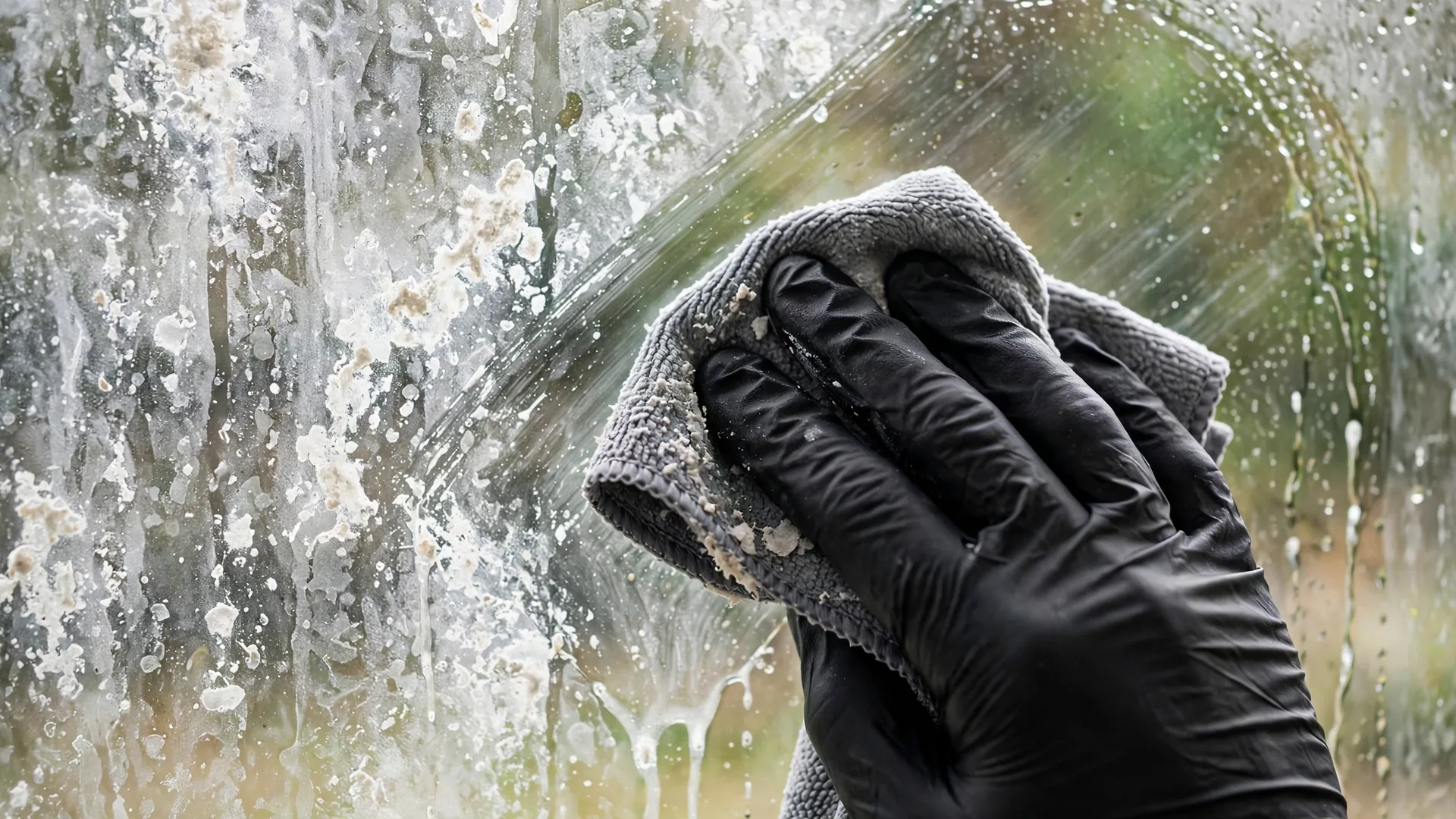
To remove hard water stains from windows, start with the gentlest method that works: a cleaner made for mineral deposits, a soft pad that will not scratch glass, and patient work in small sections, finished with a thorough rinse and a squeegee dry. Fresh spots usually lift. Older stains that have etched into the glass may lighten but not fully disappear, and harsh abrasives or razor blades can permanently scratch the surface, so knowing when to stop matters as much as knowing how to start.
What those white spots actually are
Hard water spots are mineral deposits, mostly calcium and magnesium, left behind when water evaporates off glass. The usual delivery system is a sprinkler head aimed a little too generously, but the minerals arrive in other ways too: well water used for hosing down patios, splash from mineral heavy soil, and even condensation that repeatedly forms and dries on the same pane. Each cycle lays down a thin layer, and layers stack into the chalky white spots and arcs you see.
Not all spots are equal. A fresh deposit sits on the surface and dissolves readily. An old deposit that has been through many wet and dry cycles, especially under hot sun, bonds to the glass and begins to etch it, which means the mineral has started to alter the glass surface itself. That progression is why a spot that wiped off easily last year may resist everything this year. Time and heat are the two things that turn a cleaning job into a restoration question.
Fresh spots versus etched glass
Before you start, work out which stage you are dealing with. Run a fingernail lightly across a spot. If it feels like something sitting on the glass, you are likely dealing with surface deposits. If the glass feels rough or pitted underneath, or the haze remains after a careful cleaning attempt, you may be looking at etching. The table below maps the stages to the right response.
| Stage | How it looks and feels | What removes it |
|---|---|---|
| Fresh film | Light haze, wipes off with a damp cloth | Normal washing with a squeegee finish |
| Light spots | Distinct white dots and arcs on the surface | Mineral deposit cleaner with a soft pad |
| Heavy buildup | Thick crusty layers, rough to the touch | Repeated mineral treatment, professional help for large areas |
| Etching | Haze or roughness that remains after deposits lift | May lighten with polishing; severe etching is permanent |
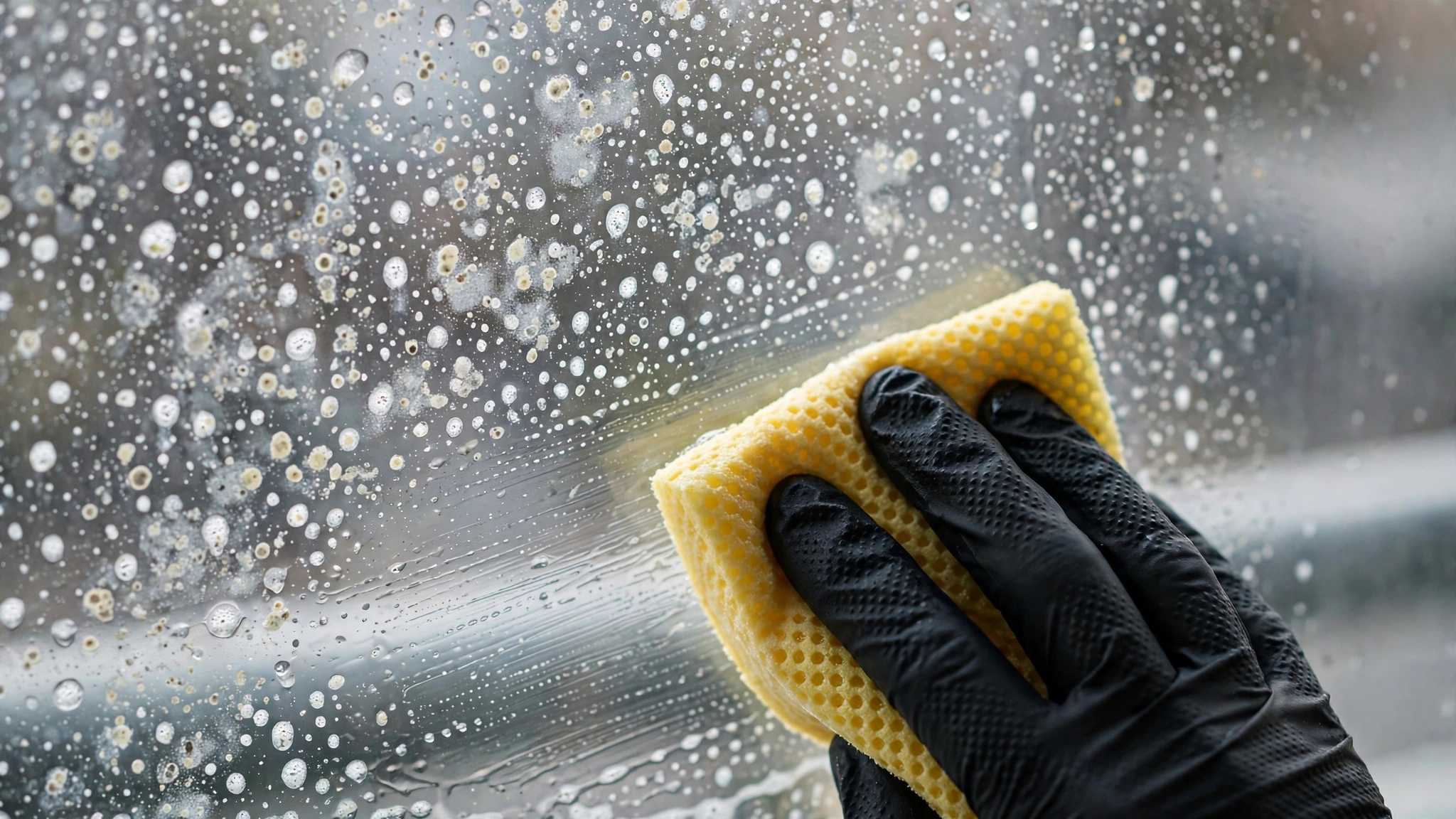
The safe removal sequence, step by step
Work on a cool, shaded pane if you can, and keep every product off the frames, sills, and surrounding stone or masonry as much as possible. Mineral cleaners are mild acids, and they can mark natural stone and bare aluminum. Tape off or drape anything you are unsure about.
- Rinse away loose dirt first. Hose or wipe the glass so grit does not get dragged across the pane during the treatment.
- Test a small corner. Apply the mineral cleaner to an inconspicuous spot and check the result before committing to the whole pane. This also tells you whether you are dealing with surface deposits or etching.
- Apply cleaner to the pad, not the glass. Put a modest amount of mineral deposit cleaner on a soft white pad or a non scratch scrub pad made for glass, and work it over a section about two feet square.
- Work in gentle circles and keep it wet. Let the chemistry do the work rather than your arm. Re wet the section if it starts to dry, and give the cleaner its recommended dwell time.
- Rinse thoroughly. Flush the section with plenty of clean water so no acidic residue stays on the glass or runs down onto the frame.
- Squeegee dry and inspect. Pull the rinse water off with a clean squeegee and look at the glass from an angle. Repeat once more on stubborn areas.
- Know when to stop. If two careful passes have not moved the haze, you are likely dealing with etching, and more scrubbing risks scratching the glass without improving it.
For upper panes and large commercial glass, the same chemistry applies, but the access changes the job. Ladders, water fed poles, and the volume of rinse water all need planning, which is where a professional visit earns its place. Our exterior window cleaning visits include mineral assessment on the panes that need it, so the treatment matches the stage of the stain.
What to avoid
The fastest way to turn hard water stains into permanent damage is reaching for the wrong tool. Abrasive powders, steel wool, and aggressive scrub pads will scratch glass, and the scratches catch light in a way that looks worse than the spots did. Razor blades deserve special caution: on tempered glass, which is common in doors and large panes, a blade can drag microscopic surface particles and leave a trail of fine scratches. Unless you are trained to test the glass first, keep blades away from it.
Strong acids are the other hazard. Industrial strength acids can remove minerals, but they can also burn skin, etch the glass further, and permanently mark frames, sills, stone, and landscaping below. Stick to consumer mineral deposit removers made for glass, follow the dwell time on the label, and rinse generously. Pressure washers have no place in this job either: the force drives water past seals and into the window unit, where it fogs insulated glass from the inside, a problem no surface cleaning can fix.
Stop new spots from forming
Removing spots without fixing the source is a treadmill. Walk the property and find where the mineral water is coming from. In most cases it is irrigation: a sprinkler head whose arc kisses the glass, or mist drifting on the wind. Re aim the heads so water stops short of the panes, and switch planting beds directly under windows to drip irrigation, which puts water at the roots instead of in the air.
Timing helps too. Watering early in the morning lets any incidental moisture evaporate before the heat of the day bakes minerals on. After any watering near glass, a quick rinse of the panes with clean water prevents deposits from starting. For properties where sprinklers cannot be fully re aimed, plan on more frequent exterior attention for the affected panes, and mention the exposure when you book so it is priced into the visit. Panes over sloped roofs or above stairwells that you cannot safely reach yourself are good candidates for our hard to reach window cleaning service, which is built around safe access to exactly that glass.
When to call a professional
Call a professional when the stains cover large areas, when the glass is high or awkward to reach, or when your test corner suggests etching rather than surface deposits. Etched glass needs an honest assessment: a pro can tell you whether polishing is worth attempting or whether the haze is permanent, and either answer saves you from buying products that cannot help. Commercial properties should treat mineral deposits as maintenance rather than emergencies, with affected panes on a regular schedule. You can see how that kind of planned care fits together on our services page, and our commercial window cleaning visits are structured around repeat schedules for exactly these recurring issues.
Hard water stains reward early action and punish delay, so the best time to treat them is when they are fresh. If your spots have been building for seasons, or the glass is somewhere you cannot safely reach, request a free quote and we will assess the stage of the staining and plan the right treatment.