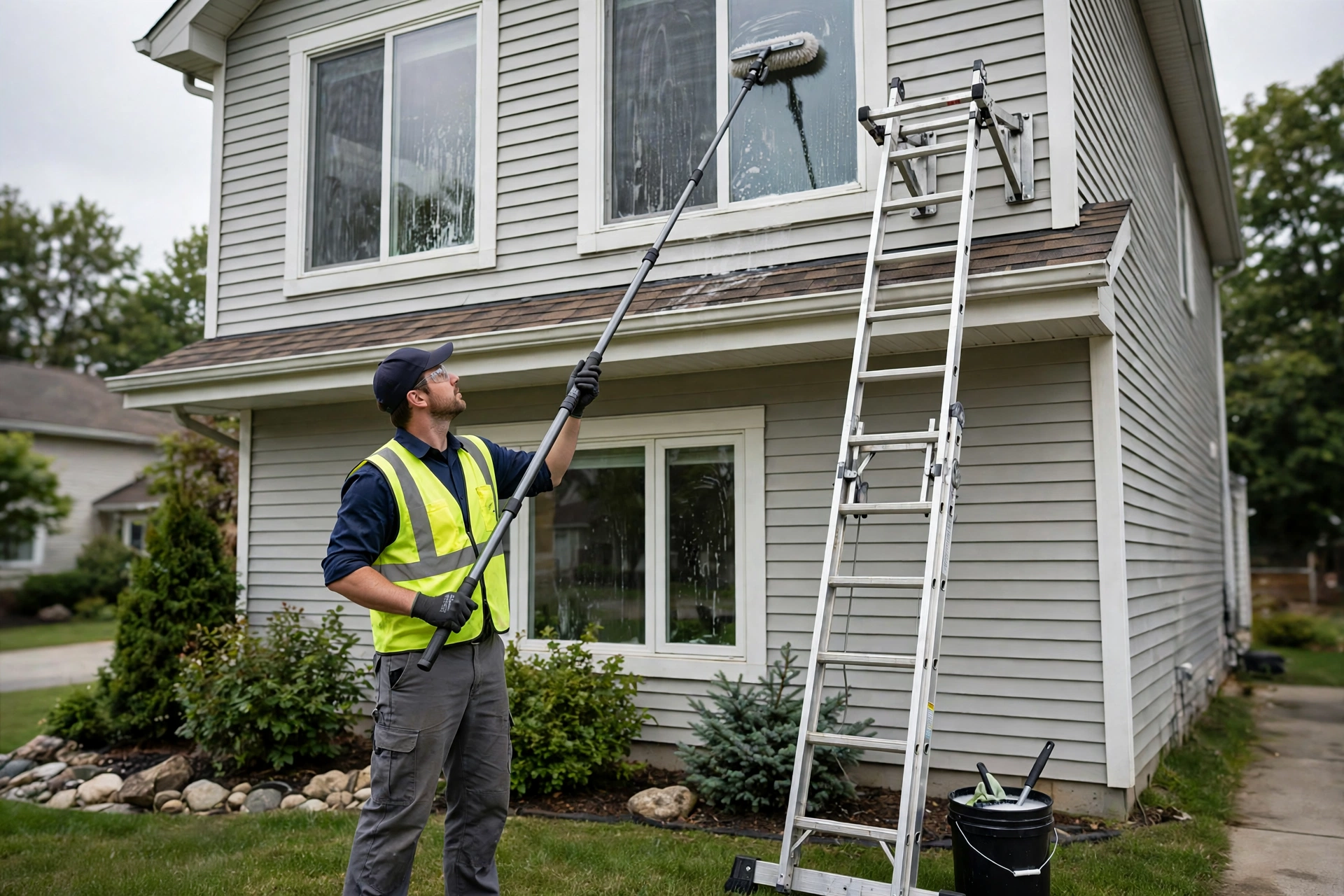
The safest way to clean high windows is to work from the ground with a water fed pole whenever possible. If a ladder is truly needed, it must stand on firm level ground at the correct angle, extend past the surface you step onto, and stay footed or tied off while you keep three points of contact at all times. Anything beyond a safe ladder reach, including steep slopes, soft or uneven ground, windows near power lines, or glass above the second story, belongs to a professional with proper access equipment. Most ladder injuries in home maintenance come from rushing the setup, not from the cleaning itself.
High windows also clean differently from ground floor glass. They collect more windblown dust and pollen, they are harder to inspect up close, and any mistake in technique shows in the light because you cannot easily go back and touch up a pane two stories up. That is why the plan matters as much as the tools: choose the method that keeps your feet on the ground first, and only climb when the setup is genuinely safe.
Start with the ground, not the ladder
Before anyone climbs, walk around the property and look at every high window from the ground. Ask three questions: can a pole reach this glass, is the ground under it stable, and what is directly below the window. Glass above a deck, a sloped bed, or a glass roof is a different job from glass above a flat lawn, and the answer decides the method. This short survey takes five minutes and prevents most of the improvising that leads to accidents.
For the exterior side of high windows, a water fed pole is the first tool to try. It washes and rinses the glass with purified water while you stand on the ground, and the glass air dries spot free. No ladder, no climbing, no balancing a bucket at height. If you do not own a pole, the same principle applies on a smaller scale: an extension pole fitted with a washer sleeve and squeegee can handle interior high glass and windows just out of arm's reach without anyone leaving the floor.
High window cleaning tools and what each one does
Cleaning second story windows safely starts with matching the tool to the window. The table below covers the options most homeowners and professionals actually use.
| Tool | What it does | When to use it |
|---|---|---|
| Water fed pole with brush | Washes and rinses exterior glass with purified water | Upper exterior windows reached from the ground |
| Extension pole with washer and squeegee | Applies cleaning solution and removes it at a distance | High interior glass and windows just out of arm's reach |
| Step ladder | Adds a few feet of stable reach | Ground floor transoms and high sashes on firm level floors |
| Extension ladder | Reaches second story windows | Only on stable ground with correct setup and a spotter |
| Professional access equipment | Lifts and rope systems reach what ladders cannot | High rise facades and unsafe access situations |
Notice what is missing from the table: garden hoses with spray nozzles and pressure washers. A hard spray drives water into frames, tracks, and wall cavities, and a pressure washer can crack glass and force water past seals. High windows should be washed with controlled flow and a soft brush, never blasted.
Ladder safety basics for window work
When a ladder is the right call, the setup decides whether the job is safe. Work through this checklist every time, even if you have used the same ladder for years.
- Inspect the ladder first. Check the rails, rungs, feet, and locking mechanisms for damage or wear. A ladder with a cracked rail or a faulty lock is not a ladder you climb.
- Set it on firm, level ground. Soft soil, loose gravel, and sloped beds let a ladder shift under load. Use leg levelers or move to solid ground rather than packing material under one foot.
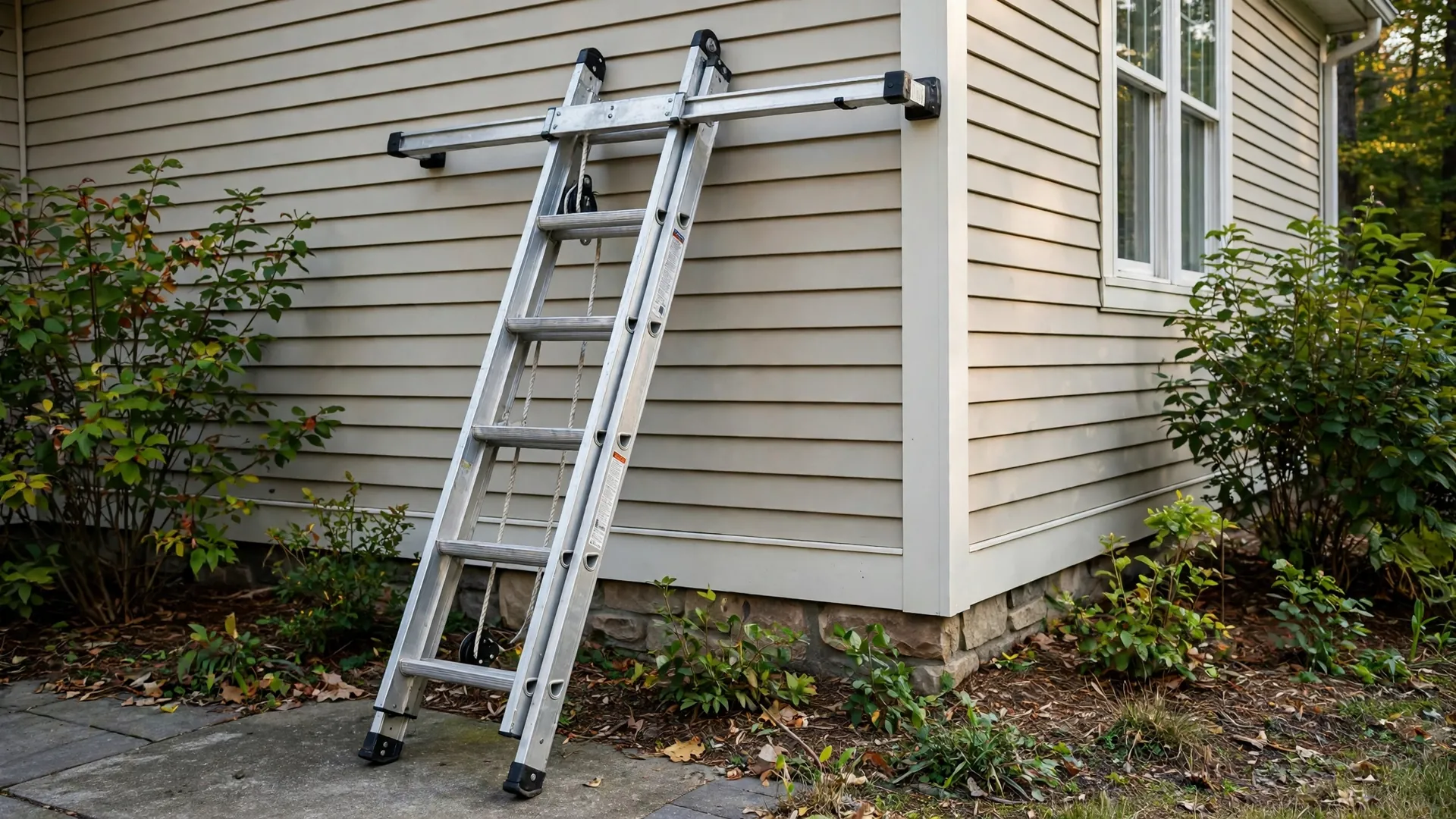
- Use the one to four angle. Place the base one foot out from the wall for every four feet of height to the contact point. Too steep and it can tip backward; too shallow and the base can slide out.
- Extend past the landing. The ladder should rise well above the surface you are working at so you have something solid to hold while positioning yourself.
- Foot it or tie it off. Have someone hold the base, or secure the top to a stable anchor. An unsecured ladder on a smooth surface is one bump away from moving.
- Keep three points of contact. Two hands and one foot, or two feet and one hand, on the ladder at all times. Carry tools in a belt or bucket rather than in your hands.
- Never overreach. Keep your body centered between the rails. If your belt buckle passes the rail, climb down and move the ladder instead.
- Respect power lines and weather. Keep ladders, poles, and water well clear of overhead lines, and postpone the work in high wind or when lightning is near.
A safe step by step process for high windows
Follow this order and the work stays organized from the ground up.
- Plan access for each window. Decide the method per window: pole from the ground, ladder, or professional. Do not decide mid climb.
- Clear the work area. Move furniture, planters, and obstacles away from the wall so the ladder or pole has a clean working zone.
- Remove screens and dust the frames. Screens come out first and get washed separately. Brush loose dust off frames, sills, and tracks so it does not wash onto clean glass.
- Wash from the top down. Start at the highest window and work downward so rinse water never dries on finished glass below.
- Clean the glass. With a pole, scrub with the brush and rinse thoroughly. With a squeegee, apply solution with the washer, pull the squeegee in smooth overlapping passes, and wipe the blade between passes.
- Detail edges and sills. Wipe the edges where the squeegee cannot reach and dry the sills so water does not sit in the tracks.
- Inspect from inside. Check the finished glass from indoors and at an angle. High glass is unforgiving in raking light, and it is easier to correct now than after the equipment is put away.
Windows you should not clean yourself
Some windows are simply outside safe DIY reach, and recognizing them is part of cleaning high windows safely. Leave the job to a professional when the glass sits above a steep slope, a glass roof, or a conservatory that cannot take weight, when power lines run near the work area, when the ground is soft or uneven with no stable alternative, or when the window is above the second story. Damaged frames, loose sashes, and cracked glass are also reasons to stop, because climbing adds stress to components that are already failing.
This is exactly the work our hard to reach window cleaning service exists for. It pairs water fed poles with the right access plan for glass that ladders cannot serve safely, from windows over slopes and landscaping to panes tucked behind architectural features. Glass above the second story on taller buildings falls under our high rise window cleaning service, which uses rope systems and lifts with trained crews. For standard homes, our residential window cleaning covers high interior and exterior glass as part of a whole house service, so no window gets skipped because it was awkward to reach.
Frequently asked questions
If your high windows are beyond what you can reach safely, our window cleaning services cover everything from second story glass to high rise facades. Request a free quote and we will plan safe access for every window on your property.