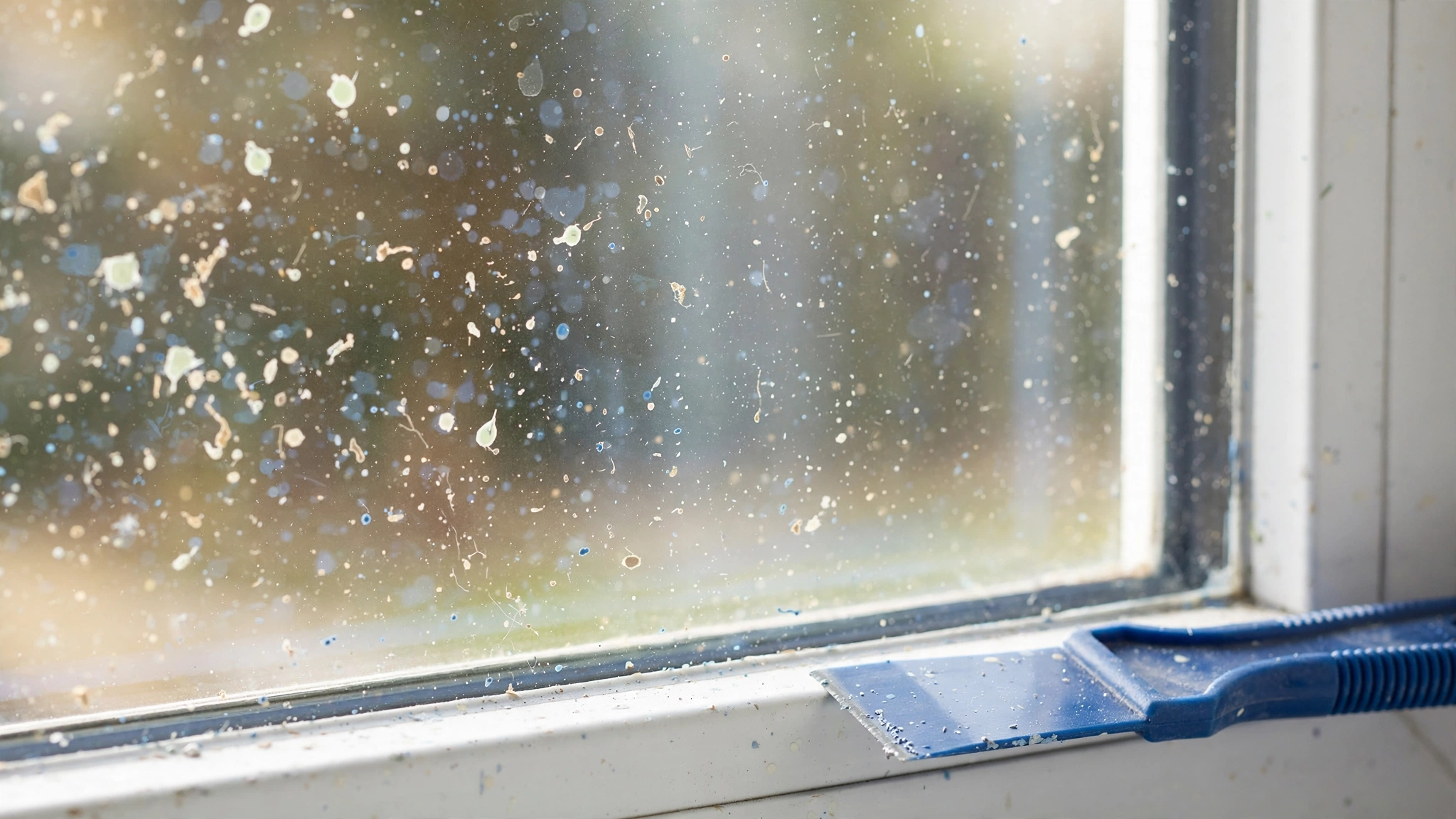
Yes, professional window cleaning can remove paint and construction debris from glass, including paint overspray, stickers, tape residue, mortar splatter, and silicone smears. The work requires more than a standard wash: technicians use fresh razor scrapers, suitable solvents, and careful technique on wet glass to lift contaminants without damaging the pane. Some debris cannot be removed safely, especially on tempered glass that carries fabrication debris or on glass with specialty coatings, so an inspection comes before any blade touches the glass. That inspection is what separates post construction window cleaning from a routine wash.
After any build or remodel, windows collect a mix of contaminants that normal washing cannot move. Painters leave overspray and drips, glaziers leave stickers and suction cup marks, masons leave mortar splatter, and every trade leaves a layer of fine dust ground into tracks and sills. Each contaminant needs its own removal method, and using the wrong one is how glass gets scratched. This guide explains what construction window cleaning covers, how paint on windows removal works safely, and where the limits are.
What post construction window cleaning covers
Post construction window cleaning is a dedicated service, not an add on to a standard wash. The scope starts with everything a normal service includes, glass washed inside and out, screens cleaned, tracks vacuumed and wiped, frames and sills detailed, and adds contaminant removal on top of it. The technician works through each pane identifying what is stuck to it: paint spots, stickers, tape, silicone, mortar, stucco splatter, or concrete dust, then treats each with the right method.
The dust alone justifies the separate service. Construction dust is fine and abrasive, and it settles into window tracks, weep holes, and the edges of the glass where the frame meets the pane. If that dust is wiped with a dry cloth or dragged across the glass under a squeegee, it scratches. A post construction clean removes the loose dust first, with vacuuming and wet wiping, before any glass contact work begins. Skipping that step is the most common way DIY after construction cleaning damages windows.
How paint comes off glass safely
Paint on windows removal follows a strict order: wet the glass, scrape with a fresh blade, then dissolve what the blade leaves behind. The glass must stay thoroughly wet through the whole process, because a dry blade dragging across dry glass is what causes scratches. The scraper is held at a low angle with light, even pressure, and the blade is replaced the moment it dulls or nicks. Dull blades skip and chatter, and that is when damage happens.
Different paints need different follow up. Latex paint softens with water and usually lifts cleanly under the blade. Oil based paint and dried drips may need a solvent applied to a test corner first to confirm it does not affect the glass coating or the frame finish. Adhesive residue from stickers and tape responds to soaking and gentle peeling followed by a solvent wipe, never to aggressive scraping. Silicone smears are the slowest of all; they need a dedicated silicone remover and patient, repeated passes rather than force.
The tempered glass problem
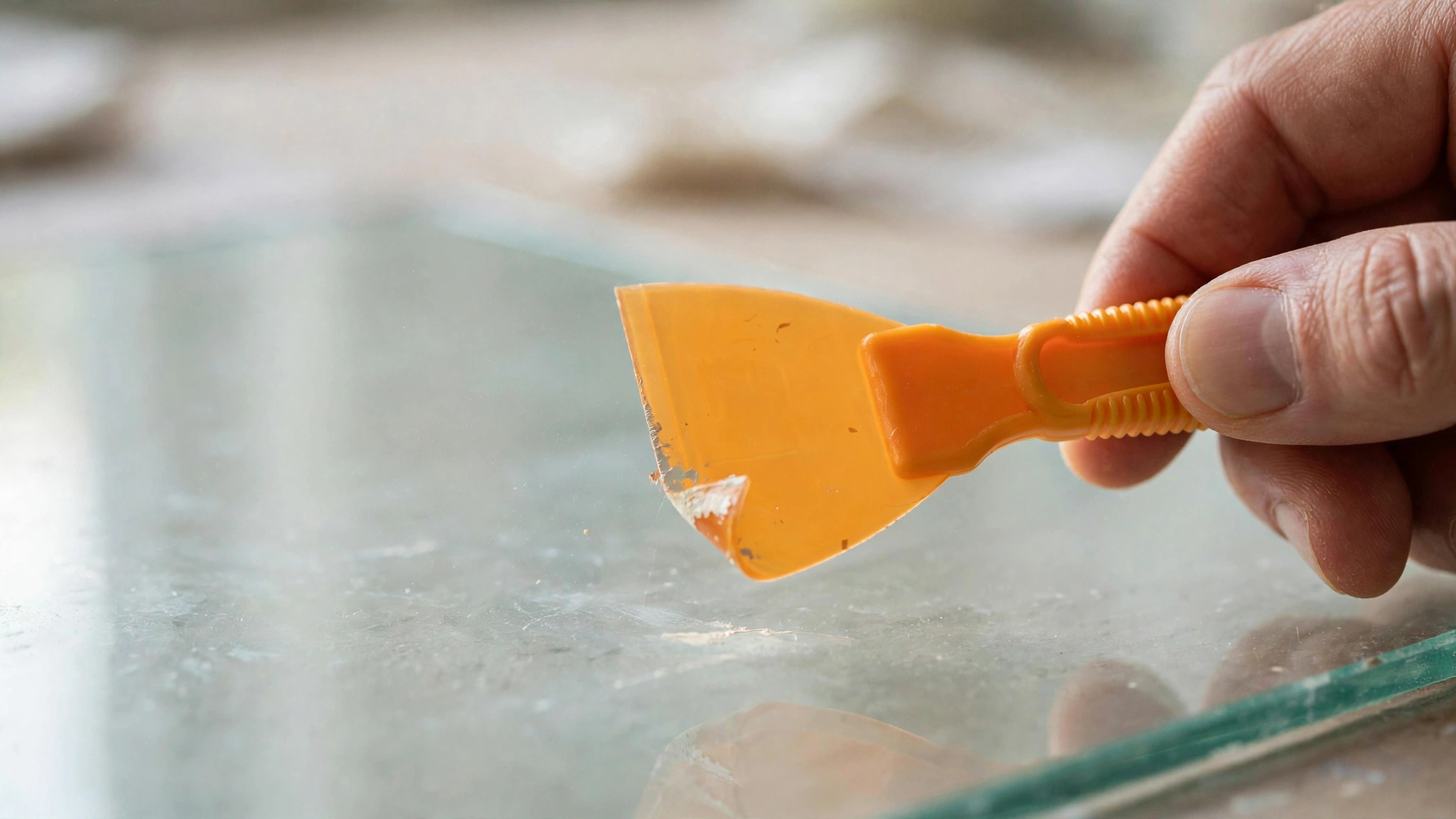
Here is the limit every property owner should understand before booking. Tempered glass, the heat treated safety glass used in doors, sidelites, low windows, and shower enclosures, can carry microscopic fabrication debris fused to its surface during manufacturing. When a razor blade passes over this debris, the particles can drag and leave fine scratches across the pane. The glass looks fine until it is scraped, and the damage shows in reflected light afterward.
A professional handles this by testing first. The technician checks whether the glass is tempered, usually marked by a small etched stamp in the corner, and tests an inconspicuous area before committing to scraping the whole pane. If the test shows risk, the honest answer is to use chemical methods only, or to leave certain debris in place rather than trade a paint spot for a scratched pane. Any company that scrapes tempered glass without testing is gambling with your windows. Ask how they handle tempered glass before you hire them; the answer tells you whether they understand the work.
Step by step: how professionals remove construction debris
A careful crew follows the same sequence on every job, because the order is what keeps the glass safe.
- Inspect the glass and frames. Identify tempered panes, coated glass, and applied films. Note what contaminants are present and choose methods per pane, not per building.
- Remove loose debris first. Vacuum tracks, sills, and weep holes. Wet wipe frames to lift abrasive dust before anything touches the glass.
- Wet the glass and keep it wet. Flood the pane with cleaning solution. Rewet constantly during scraping; the blade never touches dry glass.
- Scrape with a fresh blade at a low angle. Light pressure, overlapping passes, one direction. Replace the blade at the first sign of dullness.
- Dissolve what scraping leaves. Apply the suitable solvent for adhesives, silicone, or paint residue. Test in a corner first on coated glass.
- Wash, squeegee, and detail. Once contaminants are gone, the pane gets a full standard wash: scrub, squeegee, and edge detailing.
- Inspect in raking light. Check each pane from an angle and from inside. Construction debris hides at edges and in corners, and this is the moment to catch it.
What cannot always be removed
Some construction damage is permanent, and a trustworthy company will say so upfront. Mortar and concrete splatter left on glass for months can etch the surface as the alkaline material reacts with it; once etched, no cleaning restores the clarity. Acid based cleaners used carelessly by other trades can burn similar marks into the glass. Scratches from earlier scraping attempts, whether by a painter or a previous cleaner, are in the glass rather than on it and cannot be washed away.
Coated glass adds another boundary. Low E coatings, reflective films, and tinted surfaces can be damaged by blades and strong solvents, so debris on these surfaces may have to stay if removal risks the coating. This is why the inspection step matters so much: the goal is the best achievable result without trading a cosmetic problem for permanent damage. Our commercial window cleaning teams handle post construction work on offices and retail spaces, where large glass areas and mixed contaminants are the norm, and our residential window cleaning service covers new builds and remodels for homeowners.
Common contaminants and how each is handled
| Contaminant | Removal method | Caution |
|---|---|---|
| Latex paint spots | Razor scraper on wet glass | Keep the glass wet; use a fresh blade |
| Oil based paint | Solvent softening plus careful scraping | Test in a corner first on coated glass |
| Stickers and tape | Soak, peel gently, solvent for residue | Never pull aggressively; dissolve the adhesive |
| Mortar and stucco splatter | Soften and lift with a plastic scraper | Can etch glass if left sitting for months |
| Silicone smears | Dedicated silicone remover, repeated passes | Slow work; force risks scratching coated glass |
| Construction dust in tracks | Vacuum, then wet wipe | Never drag dry dust across the glass |
Why this is not a standard window wash
Post construction cleaning takes longer, uses more specialized materials, and carries more judgment calls than routine window cleaning, which is why it is scoped and quoted as its own service. A standard wash assumes the glass is in normal condition; a construction clean assumes every pane is a question mark until inspected. When you request a quote, mention the construction context, the type of work done, and how long ago it finished, so the crew arrives with the right tools and the right amount of time. Our exterior window cleaning and interior crews coordinate on new builds so both sides of the glass get the treatment each side needs, and you can see the full scope under our window cleaning services.
Frequently asked questions
If your project left paint, stickers, or debris on the glass, do not let it sit and do not attack it with a dry blade. Our window cleaning services include post construction cleaning with proper inspection first. Request a free quote and tell us about the project so we arrive prepared.